To fix a sticking door, find exactly where it rubs, then work from the smallest fix to the biggest: tighten the hinge screws, drive one long screw into the stud behind the top hinge, shim a hinge, move the strike plate, and only then trim wood off the door. Painted doors that grab need cured paint and a lubricant, not a plane. Most doors come right with a screwdriver and an hour. If you're still working out why the door started sticking, start with doors sticking: causes and when to worry. This guide covers the repair itself, in order, and the point where a door that keeps binding is really a question about the house.
How do you find where a door is sticking?
Close the door slowly and watch the gap around it. This Old House puts a good reveal at 1/8 to 3/16 inch, about the thickness of a nickel, even along the top and both sides. Where the gap closes to nothing is where it rubs. Tight at the top latch corner and wide at the bottom means the door sags on its hinges. Tight along the whole latch edge means it has swollen.
Three quick checks before you pick up a tool:
- Lift the handle. Pull up on the knob with the door open and watch the top hinge. If the leaf moves, the screws are loose.
- Use a strip of paper. Close the door on a sheet of paper at several points. Where it pulls out hard, the door touches the frame.
- Look for rub marks. Worn paint on the edge or the jamb shows the contact point.
How do you fix a door that sticks because of loose hinges?
Tighten every hinge screw first, on the door and the frame. If one spins without biting, the hole is stripped. The most reliable fix for a sagging door is to replace one frame-side screw in the top hinge, the one nearest the doorstop, with a screw long enough to pass through the jamb and bite into the wall stud behind it. That pulls the top of the door back toward the hinge side.
Fine Homebuilding suggests screws about 1 1/2 inches longer than the originals, with a pilot hole drilled first so the jamb doesn't split. Drive it by hand and test the door every few turns: overtightening can bow the jamb and make a new rub. For a stripped hole in the door, glue wooden matchsticks into it, let the glue set, trim flush and refit the screw.
If the screws are tight and the door still rubs, shim a hinge:
- Wedge something under the door to take its weight off the hinges.
- Loosen the frame-side screws of one hinge.
- Slip a strip of cardboard about 1/2 inch wide behind the leaf.
- Retighten and test. Add a strip if it needs more.
Fine Homebuilding's rule: shim the bottom hinge to clear a rub at the top latch corner.
How do you stop a door from sticking at the latch?
When the door closes but won't latch, or you have to lift or push it to lock, the latch bolt is hitting the strike plate instead of dropping into it. Rub chalk or lipstick on the bolt, close the door, and look at the mark on the jamb. If it lands above or below the opening, file the opening wider for a small miss, or move the plate for a bigger one.
Fine Homebuilding recommends moving a strike at least 1/4 inch so the screws reach fresh wood rather than the old holes.
If the bolt keeps drifting up or down after one fix, the frame may be moving out of square; see the foundation section below.
Should you plane or sand a sticking door?
Plane a door only after the hinges are tight and it hangs evenly, and only if it still rubs along one edge. Planing a sagging door just moves the problem and leaves a gap once the hinges are fixed. Take off the least you can: wood shrinks again in drier weather, so a door planed to fit in a humid August can rattle by winter.
If you do trim it:
- Take the door off and mark the rub, then scribe a line for the amount to remove.
- Scrape or sand the paint off first. Paint dulls a plane blade fast.
- Plane with the grain in long strokes. Fine Homebuilding suggests a slight bevel, about 3 degrees, so the inside corner clears the frame.
- Sand smooth, then prime and paint the bare wood the same day.
Step 4 is the one people skip, and it's why planed doors swell again.
How do you keep painted doors from sticking?
A freshly painted door that grabs the frame or stop is usually "blocking": two painted surfaces that touch before the paint has hardened bond to each other. Paint manufacturers' technical notes say most latex paint feels dry within hours but needs up to two weeks to cure fully, longer in damp weather. Leave the door slightly open while it cures, and the sticking usually stops.
For a door that already sticks:
- Lubricate the touch points. The same notes list talcum powder, wax or bar soap on the edge and stop as a temporary fix.
- Smooth torn paint. Sand the edge and stop smooth and recoat in drier weather.
- Thin old layers. Decades of paint can leave no room at all. Stripping the edges and stop back often frees an older door.
- Pick the right paint next time. Manufacturers recommend a good semi-gloss or gloss with high block resistance, or an oil-based coating, for doors and trim.
To keep paint from sticking doors in future, paint the edges thinly and avoid the muggiest days. Houston's summer humidity slows curing.
How do you stop wood doors from sticking in humid weather?
Seal every face of the door, including the top and bottom edges, and keep indoor humidity steady. The USDA Forest Products Laboratory's Wood Handbook explains that wood takes up moisture from the air and swells as it does. A door with bare edges drinks water through them and grows across its width. Sealing slows that exchange, so the door moves less.
Take the door off and look at the top and bottom edges: many were cut to fit and never sealed. This Old House suggests sealing all exposed surfaces in the driest part of the year, when the door is smallest.
Indoors, the EPA advises keeping relative humidity below 60%, ideally between 30 and 50%.
When does a sticking door indicate a foundation problem?
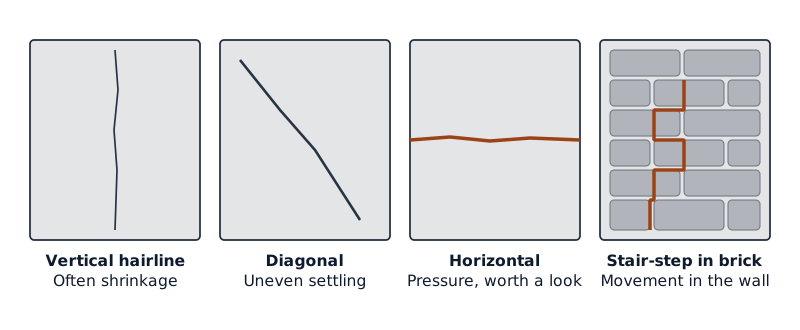
A sticking door can indicate foundation movement when the fixes above don't hold. If the hinges were tight, the door was sealed and the strike was moved, yet it binds again within months, the frame is changing shape. Other warning signs make it more likely: several doors and windows sticking at once, diagonal cracks at door corners, and a wedge-shaped gap above the door.
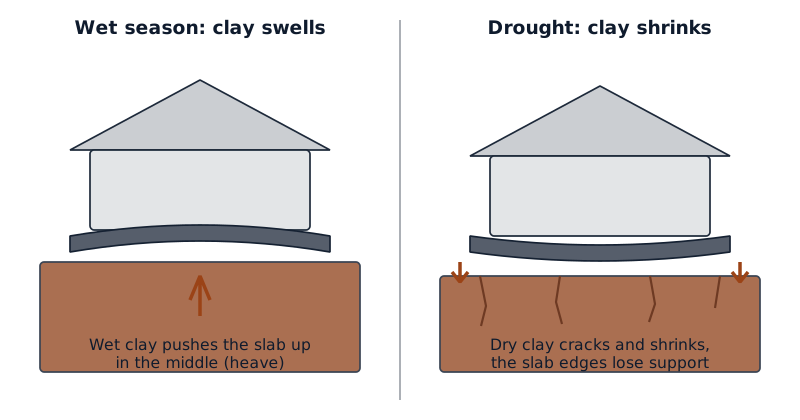
Houston's clay soils shrink in dry spells and swell after rain, which can lift and drop parts of a slab or a pier-and-beam floor. The full list of signs is on signs of foundation problems. If a patio door is the one binding, sliding glass doors sticking covers the track and roller checks.
This is where DIY stops. Leveling a house means jacking the structure, and inside the City of Houston foundation repair needs a building permit: the city's weekly permit reports list foundation repairs, including shim and level work. A foundation inspection in Houston typically costs $300 to $1,000, according to a 2026 Houston Press guide. Older homes with crawl spaces often need a pier reset rather than a slab lift, covered on pier-and-beam foundation repair. After any foundation leveling, expect to adjust the doors again.
If several doors have started binding at once, we'll arrange a visit from a local foundation contractor, and you get a written quote before any work starts.
Questions people ask
What is the fastest way to stop a door from sticking?
Tighten the hinge screws, then replace one frame-side screw in the top hinge with a longer one that reaches the stud. That pulls a sagging door back up and clears most rubs at the top latch corner in a few minutes. If the door has fresh paint, rub wax or soap on the contact edge as a stopgap while it cures.
Can a spray lubricant fix a sticking door?
A spray lubricant helps a squeaky hinge or a stiff latch, but it won't fix a door rubbing on its frame. That rub is a fit problem: loose hinges, swollen wood or a moved frame. For painted surfaces that grab, wax, talcum powder or bar soap on the edge works better than a liquid.
How much should I plane off a sticking door?
As little as you can, along the rub only. Mark the contact point, scribe a line, and stop at it. Wood shrinks in drier weather, so trimming a swollen door to fit in humid months can leave a gap later. Always fix the hinges before planing, and seal the bare edge the same day.
Why do my doors stick after it rains?
Rain raises humidity, and wood doors with unsealed edges swell. If the door frees up a few dry days later, moisture is the cause and sealing the edges is the fix. If it sticks after a long dry spell instead and frees up after rain, that pattern follows the clay soil under the house more than the door.
Do I need a professional to fix a sticking door?
Not usually. Hinge screws, shims, strike plates and paint are reasonable weekend jobs. Call a carpenter for warped doors or frames that need resetting. Call a foundation contractor when the door keeps rebinding after a proper fix, or sticks alongside new cracks and sloping floors, because then the door is a symptom of movement in the house.
For the wider picture, start with foundation repair across Houston.
Sources
- Fine Homebuilding, first aid for doors
- This Old House, how to fix a door that sticks
- USDA Forest Products Laboratory, Wood Handbook chapter 4, moisture relations of wood (2021)
- US EPA, a brief guide to mold, moisture and your home
- Technical notes on paint blocking from two paint manufacturers, checked November 2026
- City of Houston weekly building permit report, July 2024
- Houston Press, guide to foundation repair in Houston (2026)
Last changed