Pasadena is the place where Houston's land sank the most: the USGS measured more than 10 feet of subsidence near Pasadena between 1906 and 1995. Most of that sinking stopped after the late 1970s, when the city switched to surface water from Lake Livingston. So a cracked slab in Pasadena today usually points to something closer to home: the clay under the house, drainage, an old fault scarp, or the soaking Harvey gave the Vince Bayou neighborhoods. This page walks through each one, what a repair costs, and how we'll arrange a visit. Nearby cities are listed on the Houston areas page.
Is Pasadena's ground still sinking after losing 10 feet?
Mostly no. USGS reports that since the late 1970s, subsidence has largely been arrested in the Pasadena and Baytown-La Porte areas, because industry and the cities stopped pumping so much groundwater. The ground that dropped is not coming back up, but the steady regional sinking of the mid-1900s is no longer the main threat to a Pasadena slab. Local movement under one house is a different matter.
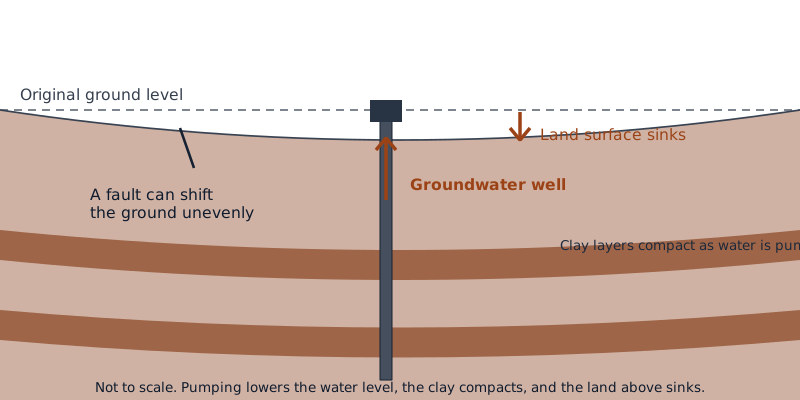
The history explains why the area is so low. Rapid petrochemical growth along the Houston Ship Channel from the early 1940s drove heavy pumping, and by the mid-1970s six feet or more of subsidence had built up along the channel between Bayport and Houston. Groundwater stayed Pasadena's main supply until the late 1970s switch to Lake Livingston, a Trinity River reservoir, after which USGS says sinking here slowed dramatically. Our Baytown page covers its neighbor on the channel.
So if your house is settling unevenly now, look first at soil moisture around the slab, covered in our guide to foundation settling.
Could an old fault be cracking a Pasadena house?
It is possible, and it is worth ruling out. USGS counts 86 active faults in the Houston area since the late 1930s, with about 150 miles of combined scarp, and says they have damaged buildings and highways. Monitoring showed the movement was driven by falling water levels, and that fault creep stopped or slowed where levels recovered, as they did in the eastern part of the region once surface water arrived.
That recovery is good news for Pasadena, but a scarp that moved decades ago can still leave a step in the ground. Inside the house, a fault and swelling clay look alike. The difference shows outside. Fault damage tends to line up in a straight band that carries on across driveways, curbs and the neighbor's lot, while clay movement stays around one slab and changes with the seasons.
A careful foundation inspection with floor elevation readings is how a local foundation contractor tells them apart. That changes the fix, as the questions below explain.
What did Harvey's Vince Bayou flooding do to Pasadena homes?
Harvey pushed Vince Bayou and Little Vince Bayou in Pasadena to new records. The Harris County Flood Control District found Vince Bayou levels 2 to 4 feet above Tropical Storm Allison and averaging 1 to 3 feet over the 500-year mark, apart from the stretch between SH 225 and the ship channel. Its report says flooding across much of Pasadena was far more widespread and deeper than in Allison.
Along Little Vince Bayou, water passed the 500-year level along the entire reach, by 2 to 4 feet in several places, and the county's heaviest rain fell in a band running south from near Pasadena.
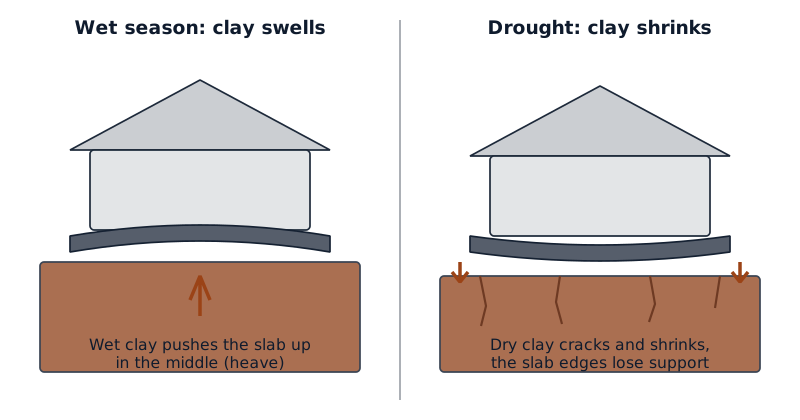
Floodwater itself rarely breaks a slab. The concern is what came after: clay that soaked for days, then dried out over the following summers, and yards that were regraded or never put right. If your house flooded in 2017 and new cracks or sticking doors appeared in the years since, have the drainage checked along with the slab. Our page on foundation drainage explains what a contractor looks at.
Does Pasadena require a permit for foundation repair?
Pasadena is its own city in Harris County, so the City of Houston's permit system does not cover it. Houston does require building permits for this work: its weekly permit reports list foundation repair permits, including shim and level jobs on block and base foundations. We could not confirm Pasadena's own rule, so call the City of Pasadena's building department before work starts.
Ask whether an engineer's report must be filed and who books the inspection, and have any fee included in the written quote.
How much should a Pasadena homeowner budget?
Most Houston-area foundation repairs land between $3,300 and $6,800, according to a 2026 Houston Press guide, and a Pasadena job is priced the same way. Pressed concrete piers run about $300 to $600 each and steel piers start around $1,000. The number of piers, access around the house, and any interior work move the total most. These are guides; the written quote sets the real price.
Two extras come up more often here. If a fault is suspected, a structural engineer's report adds roughly $500 to $1,000, per This Old House, and drainage work after flood damage is quoted separately from the lift. The foundation repair cost guide breaks the ranges down further.
Questions people ask
Is it risky to buy a house in Pasadena because of the old subsidence?
Not for that reason alone, since USGS reports the sinking largely arrested here since the late 1970s. The more useful checks are floor elevation readings, any fault scarp crossing the street or yard, and whether the house flooded in Harvey, especially near Vince or Little Vince Bayou. Ask for a foundation inspection before closing.
My Pasadena house was built before the sinking stopped. Should I worry?
A house built before the late 1970s lived through years of active subsidence, and the land in this part of the county is likely several feet lower than when it was built. That does not mean the slab is failing now. What matters is whether the house is still moving. Elevation readings taken a few months apart show that, and a local foundation contractor can set a baseline on the first visit.
Will piers fix a crack caused by a fault?
Not completely. Piers support the slab on firmer ground and can bring it back toward level, but they cannot stop a fault from offsetting the ground beneath. USGS records scarps growing by creep of up to 1 inch a year where water levels were falling. If a Pasadena inspection points to a fault, expect an engineer to advise on the layout of foundation piers and on monitoring.
This area guide is part of foundation repair houston.
Sources
- USGS Fact Sheet 110-02, land subsidence in the Houston-Galveston region
- USGS Circular 1182, Houston-Galveston chapter (mining ground water, fault creep)
- Harris County Flood Control District, immediate flood report for Hurricane Harvey (2017)
- City of Houston weekly building permit report, July 2024
- Houston Press, guide to foundation repair in Houston (2026)
- This Old House, foundation repair cost guide (October 2026)
Last changed