Yes, you can buy a house with foundation issues in Houston, and many people do. The deal works when you know three things before your option period ends: what is causing the movement, what a proper fix costs, and who pays for it. Minor settling on a slab is common on Houston's clay and is often priced into the sale. Active movement with no diagnosis is the risk. This page, part of our guide to foundation repair in Houston, covers the signs to look for, who should inspect, what Texas sellers must disclose, typical repair costs and how to negotiate.
Should you buy a house with foundation issues in Houston?
You can, as long as the problem has a diagnosis and a price before you are committed. A house with a known, quoted repair is often a fair buy, because the cost can come off the price or be fixed by the seller. Walk away when nobody can explain the cause, when the quote keeps growing, or when the seller will not let you inspect properly.
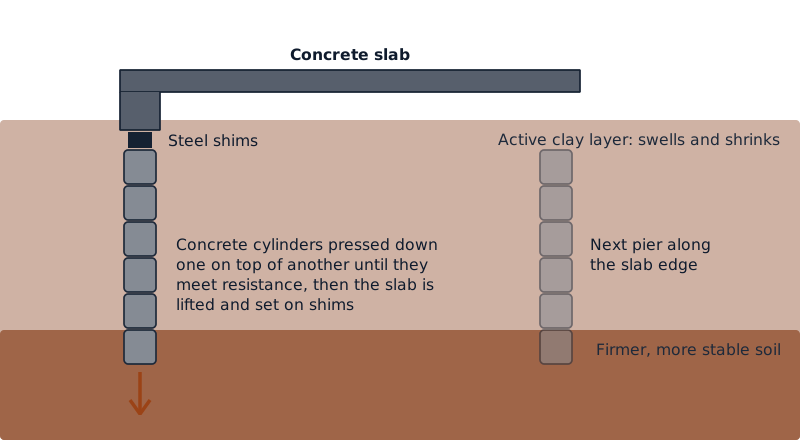
Houston is a special case. Much of the area sits on heavy clays such as the Lake Charles series, which the USDA describes as 45 to 60% clay. In dry spells it cracks half an inch to two inches wide and a foot or more deep, then swells again when water returns. That seasonal movement means plenty of Houston homes show some cracking, and an older slab with a past repair is not unusual.
What matters is whether the house is still moving and why. If you are close to the line, the signs that should end a deal are covered in when to walk away from foundation issues.
What foundation problems should you look for when viewing a house?
Look for things that point to movement, not just age. Doors that stick or will not latch, sloping floors, diagonal cracks running from the corners of doors and windows, stair-step cracks in brick, gaps where walls meet the ceiling, and windows that bind are the common ones. One small sign means little. Several signs on the same side of the house is a pattern worth checking.
- Floors. A marble or a phone level app on hard floors shows slope. Cracked floor tile in a line often tracks a crack in the slab below.
- Doors and frames. Uneven gaps at the top of a door, or a door that swings open on its own, suggest the frame has racked. See why doors start sticking.
- Outside. Look at the slab edge for cracks, at brick for stair-step gaps, and at how water drains. Downspouts dumping against the slab and soil sloping toward the house feed the clay with water on one side only.
- Pier and beam homes. Older houses, common in the Heights, sit on piers over a crawl space. Look for soft or bouncy floors and ask whether anyone has been under the house recently.
Cracks have their own language. The difference between a shrinkage crack and a structural one is explained in vertical vs horizontal foundation cracks.
Who should inspect the foundation before you buy?
Start with a general home inspection, then bring in a foundation specialist or a structural engineer if the inspector flags movement. A home inspector reports what they see across the whole house. A structural engineer measures the slab, judges whether movement is active and says what repair, if any, is needed. A foundation contractor then prices that repair.
The Texas resale contract (TREC No. 20-19) lets the buyer have the property inspected by inspectors the buyer chooses who meet TREC's rules or are otherwise allowed by law. It also says any hydrostatic testing, the plumbing pressure test used to find leaks under a slab, needs the seller's separate written permission. Ask for it early if the inspector suspects a leak.
Plan the time well. Most of this work has to fit inside the option period, so book the inspection the day the contract is signed. In Houston, foundation inspections usually cost $300 to $1,000, according to the 2026 Houston Press guide, and a structural engineer's report typically runs $500 to $1,000 nationally. Details are on foundation inspection in Houston, and the steps to commission one are in how to get a structural engineer report.
What does the Texas seller's disclosure say about the foundation?
The TREC Seller's Disclosure Notice (TREC No. 55-1) asks the seller to say whether they know of defects in the foundation or slab, floors, interior and exterior walls, and doors. It also asks about improper drainage, settling, soil movement and fault lines, previous structural repair, and past flooding or water damage. Read every answer before your option period ends.
The form itself says it is not a substitute for inspections. Use it as a list of questions:
- A yes on "Previous Structural or Roof Repair" means you should ask for the repair paperwork.
- A yes on settling, soil movement or improper drainage tells you where to send the inspector.
- Flood answers matter in Houston, because water around and under a slab can change how the clay behaves.
Under the TREC contract, if the seller has not yet given you the notice, you can terminate within 7 days of receiving it or before closing, whichever comes first, and get your earnest money back.
What paperwork should you ask for on a past foundation repair?
Ask for the written scope of work, the pier log or layout showing where each pier went, the invoice, any engineer's report before and after, the permit, and the warranty with its transfer terms. A past repair with complete paperwork can make a house a safer buy than one that has never been checked. A repair with no paperwork is an unknown.
Inside the City of Houston, foundation repair runs under a building permit, and the city's weekly permit reports list these jobs. Other cities in the metro area set their own rules, so check with that city's building department.
Repair warranties differ. Some can pass to a new owner without fuss, while others can need a written request or a fee within a set time. Read the actual terms rather than relying on the listing. The TREC contract also requires the seller, at the seller's expense, to arrange the transfer of any transferable warranties on repairs agreed in the contract.
How much does foundation repair cost on a house you're buying?
Most Houston foundation repairs cost about $3,300 to $6,800, according to the 2026 Houston Press guide. Each pier runs roughly $300 to $600 for pressed concrete and $1,000 or more for steel. Nationally, This Old House puts the average repair near $5,179, with severe lifting and leveling jobs reaching $20,000 to $23,000. The real figure comes from a written quote.
| Item | Typical range | Source |
|---|---|---|
| Typical Houston repair job | $3,300 to $6,800 | Houston guide, 2026 |
| Pressed concrete pier, each | $300 to $600 | Houston guide, 2026 |
| Steel pier, each | $1,000 and up | Houston guide, 2026 |
| Foundation inspection | $300 to $1,000 | Houston guide, 2026 |
| Structural engineer report | $500 to $1,000 | National guide, 2026 |
| Crack filling | $250 to $800 | National guide, 2026 |
| Severe lifting and leveling | $20,000 to $23,000 | National guide, 2026 |
Interior piers, which mean opening the slab indoors, add about 15% in Houston, and hard access adds 6 to 8% to pier costs. This Old House also notes that a hairline crack sealed for $250 to $800 can become a $10,000 to $15,000 repair if left. Fuller numbers are on foundation repair cost in Houston.
How do you negotiate foundation repairs when buying a house in Texas?
Get a written repair quote during your option period, then ask the seller to either lower the price, give a credit, or complete the repair before closing. The TREC contract lets you terminate for any reason during the option period. You lose the option fee but get your earnest money back, which gives you room to negotiate.
Each route has trade-offs:
- Price reduction or credit. You control who does the repair and how. This suits buyers who want their own contractor and engineer.
- Seller repairs before closing. The TREC contract asks that agreed repairs are completed before closing, with any required permits and documents showing the scope and payment. Ask for the engineer's sign-off too.
- Buy as is. Accepting the house as is does not stop you inspecting, negotiating in an amendment, or terminating during the option period.
Base any request on the engineer's findings and a written quote. If you are buying elsewhere in the metro area, the areas we cover explain local soil, flood and permit differences.
If you're under contract and need a price fast, request a foundation quote. We'll arrange a visit from a local foundation contractor, and you get the price in writing before anyone starts.
Questions people ask
Is it a bad idea to buy a house with foundation problems?
Not always. It's a bad idea when the cause is unknown or the movement is still active with no plan to stabilize it. A house with a clear diagnosis, a written repair quote and a price that reflects the cost can be a reasonable buy. A documented, permitted repair can even work in a house's favor, because the problem has already been dealt with.
Do foundation repairs devalue a home?
A repaired foundation with full paperwork and a transferable warranty is generally easier to sell than an unrepaired problem, because buyers tend to discount the unknown most. Keep the engineer's reports, the pier log, the permit and the warranty together, because the next buyer will ask for them, and the Texas disclosure form asks about previous structural repair.
How long does foundation repair take before closing?
The repair itself is often the shorter part. Scheduling the engineer, collecting quotes, pulling a permit and booking the crew can take longer than the work on site. Build that into your closing date. The TREC contract lets a buyer extend closing by up to 5 days if the seller has not finished agreed repairs.
Should you get a structural engineer or just a home inspector?
Get both when the inspector finds signs of movement. A home inspector covers the whole house and flags concerns. A structural engineer measures floor elevations, judges whether movement is active and recommends repair methods. That report is what contractors quote from, and it gives you firm ground when you ask the seller for a credit.
Can water problems make foundation issues worse after you buy?
Yes. Houston's clay swells when wet and shrinks when dry, so uneven water around a slab is a common cause of movement. Downspouts, low spots and a slab leak can all keep one side wetter than the rest. Fixing the drainage is often part of the repair; see foundation drainage in Houston.
Sources
- Texas Real Estate Commission, One to Four Family Residential Contract (Resale), TREC No. 20-19
- Texas Real Estate Commission, Seller's Disclosure Notice, TREC No. 55-1
- USDA NRCS, Lake Charles soil series description
- Houston Press, guide to foundation repair in Houston (2026)
- This Old House, foundation repair cost guide (October 2026)
- City of Houston weekly building permit report, July 2024
Last changed