Most cracks in plaster walls are surface cracks: plaster is rigid, and it cracks as the wood lath behind it swells and shrinks with humidity, or as old framing slowly sags. Those can be fixed by widening the crack, filling it and bridging it with mesh tape. A crack is more than cosmetic when the plaster beside it is loose from the lath, when it keeps growing, or when it runs diagonally from door and window corners alongside sticking doors. That points to the house moving, and the foundation crack repair guide covers what happens next. This page covers reading plaster cracks and repairing them.
What causes cracks in plaster walls?
Plaster cracks for four main reasons: the structure moves, the lath moves, the plaster was mixed or applied badly, or moisture gets into it. The National Park Service's guide to historic plaster names structural problems, poor workmanship, improper curing and moisture as the usual causes. In a Houston house, settling on clay soil and seasonal swings in humidity are often the two at work.
Plaster on wood lath stays up because wet plaster was pushed through the gaps between the lath strips and slumped behind them, forming "keys". As long as the keys hold, a crack is only a line in the surface. When the keys break, the plaster comes loose, and a simple fill will not last.
The age of the house matters. The same guide says gypsum began replacing lime as a plastering material around 1900, and that by the late 1930s gypsum board "rock lath" was used almost exclusively in homes. So a 1920s bungalow most likely has three coats of plaster over wood lath, while a 1950s house may have plaster over gypsum lath, where cracks often follow the joints between panels.
Which cracks in plaster walls are serious?
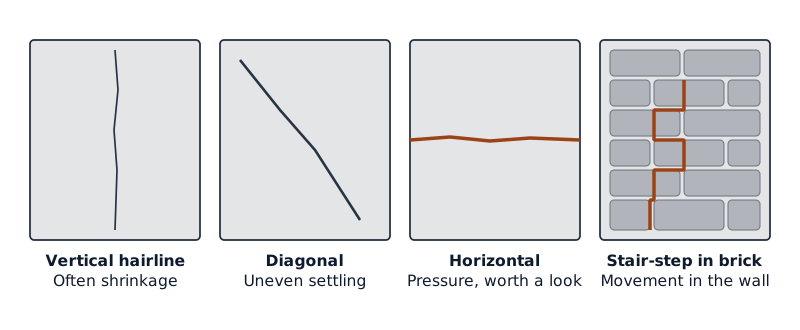
A plaster crack is serious when it is wide, growing or paired with other signs of movement. Fine hairline cracks in plaster that is otherwise solid are not a concern, according to the National Park Service. Diagonal cracks running in opposite directions, a crack where two walls meet, or plaster that bulges away from the wall all deserve a closer look before anyone patches them.
| What you see | What it usually means |
|---|---|
| Fine hairline cracks in sound plaster | Normal aging; fill and paint |
| A net of fine, irregular lines (map cracking) | A thin or oversanded base coat; cosmetic |
| Horizontal cracks that come back each year | Wood lath swelling and shrinking with humidity |
| Diagonal cracks from a door or window corner | Stress in the wall, often framing or settling |
| Diagonal cracks in opposite directions | Settling or soil movement under the house |
| A crack at the corner where two walls meet | Possibly structural; investigate before patching |
| Cracked plaster that bulges or sounds hollow | Broken keys; the plaster needs reattaching |
Houston homes almost never have a basement, so horizontal cracks from soil pushing on a buried wall are rare here; on a plaster wall the Park Service links them mostly to lath movement. For concrete, see vertical vs horizontal foundation cracks.
How do you check whether the plaster is still attached?
Press gently with a flat hand on each side of the crack, working out about a foot. Solid plaster feels firm and sounds dull when you tap it with a knuckle. Loose plaster flexes, crunches or sounds hollow. Loose plaster has lost its keys, and it must be reattached before you fill the crack, or the repair will crack again along its edges.
Then test whether the crack is still moving. Pencil a short line across each end of the crack, write the date beside it, and photograph it next to a ruler. Check it every few weeks through a dry spell and a wet one. A crack that opens and closes a little with the seasons is lath movement. A crack that only ever grows means something under it is still shifting.
How do you fix cracks in plaster walls?
To fix a crack in sound plaster, widen it slightly into a V, clean out the dust, fill it with a quick-setting joint compound, press fiberglass mesh tape into the fill, then cover the tape with two more thin coats feathered past its edges. Sand lightly, wipe with a damp sponge, prime and paint. This is the method the National Park Service describes for cracks that reopen with humidity.
- Check the paint first. The EPA says homes built before 1978 are more likely to have lead-based paint. If yours is that old, mist the area before you scrape and keep sanding to a minimum.
- Widen the crack slightly with a pointed tool, such as a crack widener or the tip of a utility knife, so the fill has an edge to grip.
- Brush and vacuum out the dust, then dampen the edges lightly so the old plaster does not pull water out of the new fill too fast.
- Fill the crack with a setting-type (powder) joint compound or patching plaster, pressed in hard.
- Bridge it with mesh tape if the crack has opened before. Press the tape into the wet fill.
- Add a second coat over the tape once the first has set, then a third to level the surface, each wider than the last.
- Sand lightly, wipe with a damp sponge, let it dry, prime the patch and paint the wall.
Setting-type compound suits plaster better than premixed spackle because it hardens by chemical reaction and stays rigid, closer to the plaster around it. For a side-by-side of fillers, see filler for cracks in walls.
How do you repair loose or bulging plaster around a crack?
Loose plaster beside a crack is screwed back to the lath before the crack is filled. The Park Service describes using flat-head wood screws with plaster washers, thin perforated discs that spread the grip over a wider area. Once the plaster is snug against the lath, the crack and the washers are taped and skim-coated so neither shows.
Drive each screw only until the plaster sits flat; overtightening cracks it further. Where the plaster has crumbled or fallen away, the Park Service's method is to cut back to sound edges, fix expanded metal lath over the old wood lath, and rebuild the hole in three coats, each stepped over the one before.
Large bulging areas of a ceiling are a different job. They can come down without warning, so keep people out from underneath and have a plasterer assess them. Plastering cracks in walls covers full plaster rebuilding.
Why do plaster walls keep cracking in older Houston homes?
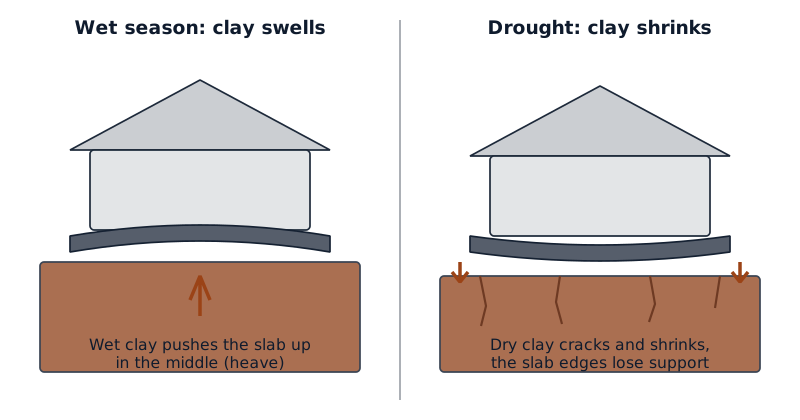
Plaster walls in older Houston homes keep cracking because the ground and the air both move them. Much of the area sits on clay that swells when wet and shrinks when dry, and many plaster houses stand on raised pier and beam floors that shift with it. Add Gulf Coast humidity working on the wood lath, and some cracks reopen every year.
The USDA describes Lake Charles clay, typed in Fort Bend County and found across southeast Texas, as 45 to 60% clay that cracks 1/2 to 2 inches wide when dry. The City of Houston's guidelines for the Houston Heights describe its houses as mostly wood siding on pier and beam foundations, with Craftsman bungalows popular from 1905 to 1925, which is exactly the age of house that has lath and plaster.
When the piers under one side of a raised house settle, the floor beams sag, the framing racks, and the plaster above shows it first as diagonal cracks over doors. Patching those cracks without leveling the floor hides them for a season at most. The pier and beam foundation repair page explains how those floors are re-shimmed and leveled.
When should a foundation contractor look at a plaster crack?
Call a foundation contractor when a plaster crack keeps growing past your pencil marks, has one edge sitting proud of the other, or comes with doors that stick, floors that slope, or gaps opening between walls and ceiling. Those together suggest the house is moving. In the City of Houston, foundation repair needs a building permit, so the fix is professional work, not a weekend patch.
The National Park Service's advice is plain: repair the structure first, then the plaster, and consult a structural engineer if a crack seems to be expanding. A crack that shows up with doors sticking in the same part of the house is a common early sign.
Moisture is the other reason to stop. Stained, bubbling or crumbling plaster usually has water behind it. Fix the leak or the drainage first: patching wet plaster fails, and paint is not waterproofing.
We'll arrange a visit from a local foundation contractor, who checks the floors, the piers or slab, and the cracks, then gives you a written quote before any work starts.
Questions people ask
Why does the same plaster crack come back every year?
A crack that reopens in the same season each year is usually moving with humidity. Wood lath absorbs moisture from the air and swells, then shrinks as it dries, and rigid plaster cannot follow it. A filled crack with no tape across it will open again along the same line. Widening the crack and bridging it with mesh tape is what usually stops it.
Should I replace cracked plaster with drywall?
Not usually because of cracks alone. Sound plaster with hairline cracks is worth repairing: it is dense, quiet and part of an older home's character. Replacement makes more sense where large areas are loose, crumbling or water damaged. Tearing out plaster also creates heavy dust, and in a house built before 1978 the paint on it may contain lead.
Are cracks in plaster ceilings more serious than wall cracks?
They can be, because gravity works against a ceiling. A hairline crack in a sound ceiling is cosmetic. A ceiling crack with a sag, a bulge or a hollow sound next to it means the keys holding the plaster to the lath may have broken, and a section could fall. Keep people out from under it and have it looked at. Cracks in ceilings and walls covers both together.
How long does a plaster crack repair take?
A single crack in sound plaster usually takes a day or two of short sessions, because each coat has to set or dry before the next. Setting-type compound can be ready to recoat within hours. Premixed compound may need overnight, longer in humid weather. Reattaching loose plaster first adds time. Foundation work, if the crack points there, comes first and takes longer.
The rest of our guides start from foundation repair in Houston.
Sources
- National Park Service, Preservation Brief 21, Repairing Historic Flat Plaster, Walls and Ceilings
- US Environmental Protection Agency, protect your family from sources of lead
- USDA NRCS, Lake Charles soil series description
- City of Houston, Houston Heights design guidelines
- City of Houston weekly building permit report, July 2024
Last changed