The right filler for cracks in walls depends on the crack and the wall. For a hairline crack or small nail pop in drywall, a lightweight spackle is enough. For a longer crack, or one that has already come back once, use joint compound over fiberglass mesh tape. Where a wall meets trim, a door casing or a tub, use a paintable flexible caulk instead. This page explains how to pick the filler, how to apply it so the crack stays hidden, and how to spot the cracks that point to the foundation, which are covered in more depth on our foundation crack repair page.
What is the best filler for cracks in walls?
The best filler is the one matched to the crack. Lightweight spackle suits pinholes and short hairline cracks because it goes on in one pass and sands easily. Joint compound, bridged with tape, is the better choice for any crack longer than a hand span or one that has reopened. Flexible caulk belongs only where two different materials meet, because those joints move every season.
Here is how the common fillers compare on an interior wall:
| Filler | Best for | Where it falls short |
|---|---|---|
| Lightweight spackle | Hairline cracks, nail pops, small dents | Too soft to bridge a crack that moves |
| Premixed (drying-type) joint compound | Taped cracks, wider patches, skim coats | Shrinks as it dries, so it needs two or three thin coats |
| Setting-type joint compound (powder) | Deeper cracks, plaster repairs, first fill coat | Hardens by chemical reaction, so it is harder to sand |
| Fiberglass mesh tape | Bridging a crack under the compound | Must be fully buried, or the pattern shows through paint |
| Paintable flexible caulk | Joints between wall and trim, casings, tub surrounds | Looks rubbery on a flat wall and cannot be sanded smooth |
How do you fill a crack in a drywall wall?
To fill a drywall crack so it stays hidden, open it slightly, clean out the dust, press compound into it, bed mesh tape over it, then build two or three thin coats that feather out past the tape. Sand lightly between coats, prime the patch, and paint the whole wall section. A single thick coat over an untaped crack is the most common reason the line reappears.
- Protect the room. Drop cloth on the floor, plastic over anything below the crack.
- Open the crack into a shallow V with the hook of a painter's multi-tool or a utility knife, so the filler has something to grip.
- Brush out the dust. This Old House points out that loose gypsum crumbs trapped under a patch can lead to the crack returning.
- Press compound into the crack with a 6-inch taping knife.
- Bed fiberglass mesh tape over the crack while the compound is still wet, then trim the ends.
- Apply thin coats over the tape, each a little wider than the last. Let each coat dry as the product label says, then sand lightly.
- Prime, then paint. Unprimed compound soaks up paint and shows as a dull stripe.
How do you fill cracks in plaster walls in older Houston homes?
Plaster cracks need more care than drywall cracks because the plaster may be loose from the wood lath behind it. Press gently on each side of the crack first. If it feels solid, rake the crack open, dampen it lightly, and fill it with setting-type compound before taping and finishing. If the plaster flexes or sounds hollow, it needs to be reattached before any filler goes on.
The City of Houston's design guidelines for Houston Heights describe its houses as mostly wood siding on pier-and-beam foundations, with Craftsman bungalows popular from 1905 to 1925. On a raised floor like that, plaster walls crack as the floor beams sag or the piers shift, so a crack that keeps reopening above a doorway often starts in the floor.
For reattaching and patching plaster, see plastering cracks in walls.
When should you use caulk instead of wall filler?
Use caulk where the wall meets something made of a different material: baseboards, crown molding, door and window casings, and the edge of a tub or shower. Those joints open and close with heat and humidity, and a hard filler there will crack again within months. Use spackle or joint compound for cracks across the flat face of the wall.
Caulk is a flexible sealant, not a surface filler, and on a flat wall it leaves a soft line that cannot be sanded. In a bathroom it helps keep moisture out of the wall cavity, but it is not waterproofing. If water is already getting into the wall, find the leak before you fill anything. For more on the choice between products, see caulking cracks in walls.
Why does a filled wall crack keep coming back?
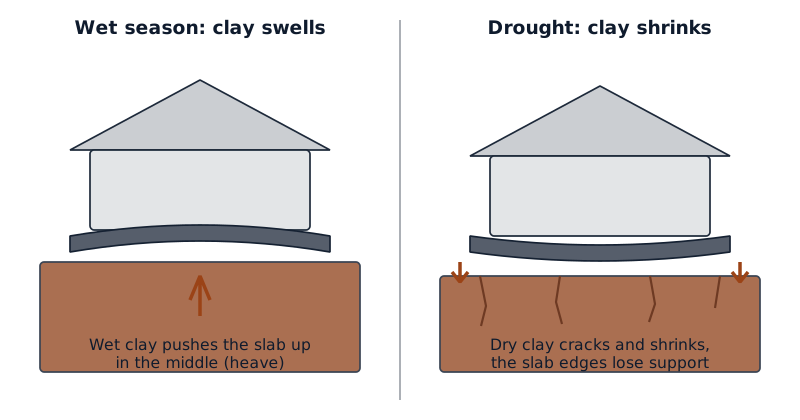
A crack that reopens after a careful repair is usually moving. Filler only covers the surface. If the framing, the floor or the slab underneath keeps shifting, the crack opens again along the same line, often within a season. In the Houston area, that movement is commonly the clay soil swelling and shrinking under the house as it gets wet and dries out.
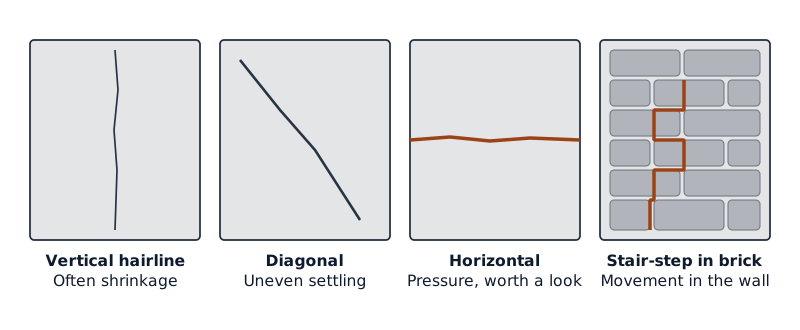
The USDA describes Lake Charles clay, common across southeast Texas, as 45 to 60% clay that cracks 1/2 to 2 inches wide at the surface when dry. Walls often show that movement first, as diagonal cracks from the corners of doors and windows.
A simple test before you fill again: mark each end of the crack in pencil with the date, take a photo beside a ruler, and check it every couple of weeks. A crack that grows past the marks is active, and filling it will only hide it for a while. If doors in the same area have also started to rub, our page on doors sticking explains what that combination usually means.
Which wall cracks should you not just fill?
Do not simply fill a crack that is wider than about 1/4 inch, has one edge sitting proud of the other, runs horizontally across a wall, or keeps returning after a proper taped repair. The same goes for any crack that appears alongside sticking doors, sloping floors or gaps where the wall meets the ceiling. These are signs the house may be moving, which is a serious problem filler cannot fix.
This Old House notes that several symptoms together are more telling than one crack on its own.
Houston homes almost never have a basement, so horizontal cracks from soil pressing on a below-grade wall are rare here. When a horizontal crack shows up on a Houston interior wall, it is more often a seam in the drywall or a sign of framing movement, and worth having someone look at. Our guide on when foundation cracks are worth worrying about walks through the warning signs.
If the cause turns out to be the foundation, the repair is not DIY work. In the City of Houston, foundation repair needs a building permit, and the city's weekly permit reports list dozens of them. A foundation inspection is the usual first step before anyone prices the work.
Is it safe to sand old paint when filling wall cracks?
It can be unsafe if the house was built before 1978. The EPA says homes built before then are more likely to have lead-based paint, and it advises against dry sanding paint that may contain lead. For small areas, the EPA advises fixing damaged paint without sanding where you can, and wetting the surface first if you must sand.
Keep the repair small, wet-sand only around the crack, and clean up with a damp cloth. For a larger job, the EPA recommends a contractor trained in lead-safe work practices.
Questions people ask
How long does wall filler take to dry before painting?
It depends on the product and the depth of the fill, so follow the label. Lightweight spackle in a shallow hairline crack is often ready to sand and paint the same day. Premixed joint compound dries by evaporation and can take overnight per coat, longer in a humid Houston summer with the windows open. Setting-type compound hardens by chemical reaction, so it is usually ready for the next coat sooner.
Should I use mesh tape or paper tape on a wall crack?
For crack repair, most homeowners find fiberglass mesh tape easier. It sticks in place, and This Old House notes it is not affected by moisture and embeds fully in the compound. Paper tape is stronger on inside corners and needs a bed of compound under it. Whichever you use, bury it under thin coats and feather well beyond the edges so it does not show.
Can I fill cracks in a damp wall?
Not until the moisture is dealt with. Filler applied to a damp wall can lose its bond, bubble or grow mold behind the paint. Find the source first, such as a plumbing leak, a failed tub seal or water pooling against the outside wall, then fill once the wall is dry.
Do hairline cracks in walls need filling at all?
Not always. Fine hairline cracks at drywall seams or above doors are common as a house settles and the seasons change humidity, and many never grow. Filling them is mostly cosmetic. Mark one with a pencil and a date before you decide. If it stays the same for a few months, fill and paint it. If it grows, that is worth a closer look.
Will filling a crack hide a foundation problem from an inspector?
It may hide the crack, but not the movement behind it. An inspector also checks door fit, floor slope and the outside walls, and an active crack reopens in time. If you are selling, tell your agent about any crack you know is active rather than relying on filler. Filling a stable, cosmetic crack is normal maintenance.
For the wider picture, start with Houston foundation repair.
Sources
- This Old House, how to patch cracked drywall
- This Old House, foundation cracks: what is normal and when to worry (April 2026)
- US Environmental Protection Agency, protect your family from sources of lead
- City of Houston weekly building permit report, July 2024
- USDA NRCS, Lake Charles soil series description
- City of Houston, Houston Heights design guidelines
Last changed