Worry about cracks in walls and ceilings when they grow, pass about 1/4 inch wide, come back after a patch, or arrive with other changes: doors that stick, a sagging ceiling, a water stain. A thin line that stays the same for months is usually the house drying and shifting, not a failing structure. This page sorts what you see into three groups: act today, book a check, or watch. For how cracks get fixed once you know, see foundation crack repair in Houston. Below: what each group looks like, how to track a crack through a season, and why Houston cracks peak in summer.
When should you worry about cracks in walls and ceilings?
Worry when a crack changes. One that gets longer, wider or uneven from end to end is a sign something is still moving. Worry sooner when it shows up with other symptoms in the same part of the house, such as a door that no longer latches or a ceiling that dips. One fine, stable crack on its own is rarely serious. Several new cracks at once, or one that reopens after filling, deserve a closer look.
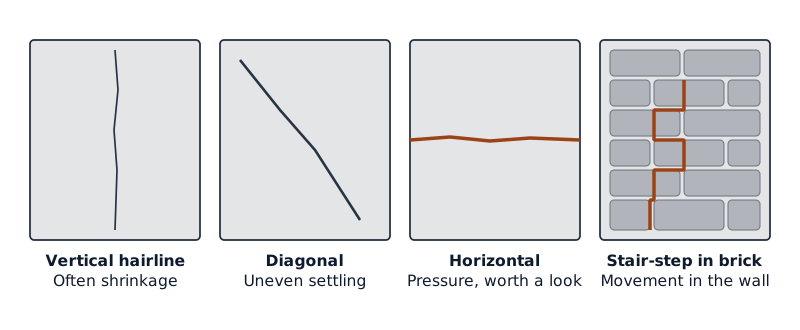
Width is a clue, not the whole story. The UK Building Research Establishment groups crack damage into six categories and treats the lower three, with cracks up to 5 mm wide (a little under 1/4 inch), as cosmetic. A crack that is widening over time moves up a category, which is why tracking beats a single measurement.
Ask three questions of any crack:
- Is it changing? Growing length or width outranks every other sign.
- Is it alone? Look for sticking doors, sloping floors, or cracks in the brick outside the same wall.
- Is there water? A stain, a soft spot or a musty smell makes it a moisture problem, which is a different job.
Which wall and ceiling cracks need attention the same day?
Act the same day when a ceiling crack sags, bulges or shows a brown stain, when drywall or plaster moves under light pressure, or when a crack opens suddenly after a storm or a leak. These usually point to wet board or failed fasteners overhead, not a slow foundation issue, and wet ceiling board can come down. Deal with the water first and the crack second.
- Keep people and pets out of the room under a sagging or stained ceiling.
- Find the source: the roof, an attic air handler drain pan, a bathroom above, a supply line. Shut the water off at the main if it is plumbing.
- Photograph the crack with a tape measure in the frame.
A roofer or plumber is the right first call for a leak. Once the area is dry, if the crack still looks like movement, that is when a foundation check makes sense.
Which cracks mean you should book a foundation check soon?
Book a check within a few weeks when a crack is wider than about 1/4 inch, runs diagonally from a door or window corner, is wider at one end, or reappears after patching. The same goes for new cracks in several rooms on one side of the house, or cracks that line up with stair-step cracks in brick outside. That pattern suggests the slab or piers under that wall are moving.
| What you see | Most likely cause | How soon to act |
|---|---|---|
| Thin straight line along a drywall seam | Tape joint, framing shrinkage | Watch, patch if stable |
| Gap at the wall and ceiling line that comes and goes | Roof truss movement | Watch, flexible repair |
| Thin diagonal crack from a door corner, not growing | Minor settling | Track for a season |
| Diagonal crack wider at one end, or over 1/4 inch | Foundation movement | Book a check soon |
| New cracks in several rooms plus doors sticking | Foundation movement | Book a check soon |
| Sagging, stained or loose ceiling | Water or fastener failure | Same day |
The usual next step is a foundation inspection: someone measures floor levels across the house, looks at the cracks inside and out, and checks drainage. A Houston guide puts inspections at about $300 to $1,000, averaging about $600. A structural engineer's written report runs about $500 to $1,000 nationally. Any repair price comes in writing before work starts.
Which cracks in walls are normal and safe to watch?
Hairline cracks that are straight, thin and stable are normal in most houses. They show up along drywall tape joints, above door frames and where two walls meet. New homes get them in the first year or two as framing lumber dries. If a crack keeps the same width through a full summer and winter, it is almost certainly cosmetic and can be patched next time you paint.
Some alarming-looking cracks are harmless. A gap along the line where an interior wall meets the ceiling, opening in one season and closing in another, is often truss uplift. Building Science Corporation explains that roof trusses move because their top and bottom chords sit at different moisture levels in an insulated attic. You can't prevent it, and it says nothing about the foundation. Fixing cracks in a drywall ceiling covers the flexible repair.
A crack that runs from a wall straight across the flat of the ceiling, away from any seam, is different. It suggests a whole section of the house is moving together, often above a doorway or along a bearing wall. Track it closely, and book a check if it grows.
Warnings about horizontal cracks in a basement wall rarely apply here: most Houston homes sit on a slab or pier and beam, with no basement. Horizontal cracks in interior drywall are usually seams; in exterior brick, have them looked at.
How do you track a crack for a season before you worry?
Mark each end of the crack with a pencil line and the date, measure its widest point, and photograph it with a ruler in the frame. Check every few weeks for at least one full wet and dry cycle. If it grows past your marks or gets wider, it is still moving. If it stays put, it is most likely settled and cosmetic.
- Mark and date both ends in pencil. This Old House recommends the same method for foundation cracks.
- Measure the widest point and write it beside the mark.
- Photograph it from the same spot each time, ruler in view.
- Note the weather. A crack that widens in August and narrows after autumn rain is telling you about the soil.
- Walk the outside of the same wall, looking at brick, siding and the slab edge.
Why do Houston wall cracks get worse in summer?
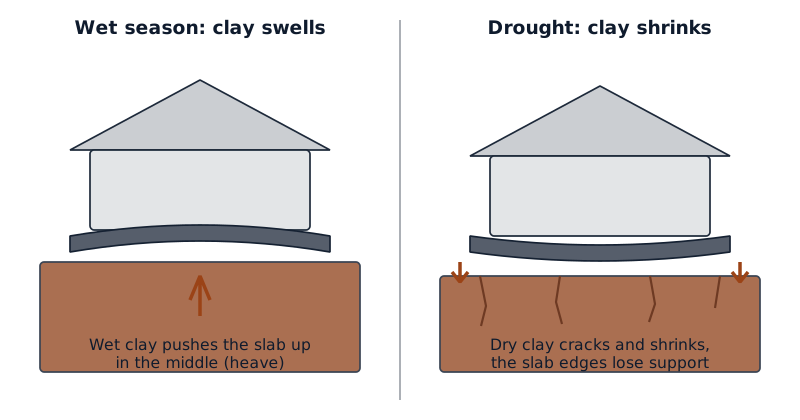
Much of the Houston area sits on expansive clay that shrinks in dry weather and swells when wet. The USDA describes Lake Charles clay, common in southeast Texas, as cracking 1/2 to 2 inches wide and a foot or more deep when dry, with those cracks open 60 to 90 days in most years. As the soil shrinks, parts of a slab lose support, and the walls above crack.
That is why many homeowners notice new cracks in late summer and see some close after autumn rain. Moisture is the driver. Gutters dumping water at one corner, a bed watered heavily on one side, or a large tree drawing water from under one edge all make a house move unevenly, and the walls show it first. For slab cracks themselves, see foundation cracks: when to worry.
Patching wall cracks is a job you can do yourself. Repairing the foundation under them is not: inside the City of Houston, foundation repair needs a building permit, and one weekly city permit report from July 2024 listed 23 of them. A local foundation contractor pulls the permit as part of the job.
If your cracks are growing, or come with sticking doors and uneven floors, we'll arrange a visit from a local foundation contractor who looks at the whole house, and gives you a written price before any work starts.
If you want to understand a crack before deciding how worried to be, start with what a crack in a wall means.
Questions people ask
Are cracks in walls and ceilings a sign of foundation problems?
Sometimes, but rarely on their own. Thin, stable cracks along seams and at the wall and ceiling line are mostly framing and drywall movement. Cracks that run diagonally from door corners, grow over time, or appear with sticking doors and sloping floors are the ones that point to the foundation. The pattern across the house tells you more than any single crack.
How wide does a wall crack have to be before it is serious?
Cracks well under 1/4 inch that stay the same size are generally cosmetic. Once a crack passes about 1/4 inch, or keeps widening, treat it as a sign of movement and have it looked at. Change matters more than width: a fine crack that doubles in a month is more concerning than a wider one that has not moved in a year.
Should I fill a wall crack before I know what caused it?
Wait until you have tracked it for a season. Filling it straight away erases the record of whether it is growing. Mark, measure and photograph it first. If it stays stable, fill it with a flexible patching compound and repaint. If it reopens after a patch, that is useful information and a reason to book a check.
Why did a crack appear right after heavy rain?
Clay soil swells when wet, and if one side of the house takes on more water than the other, the slab can lift unevenly for a while. Water getting into the attic or a wall cavity can also swell the board and crack it. Check first for a leak or stain. If the area is dry, track the crack through the next dry spell.
Do new houses get cracks in the walls?
Yes. Framing lumber keeps drying and shrinking for the first year or two, so small cracks at drywall seams, above doors and in corners are common. They are usually thin and straight. A new house with wide diagonal cracks, or doors that stop closing, is different and worth raising with the builder or having inspected.
The rest of our guides start from foundation repair houston.
Sources
- This Old House, foundation cracks: what is normal and when to worry (April 2026)
- BRE Group, assessing cracks in houses (summary of BRE Digest 251)
- Building Science Corporation, RR-0107 Drywall, Wood and Truss Uplift
- USDA NRCS, Lake Charles soil series description
- Houston Press, guide to foundation repair in Houston (2026)
- This Old House, foundation repair cost guide (October 2026)
- City of Houston weekly building permit report, July 2024
Last changed