Non-structural foundation cracks come from the concrete shrinking as it dries, not from the house moving. They are usually hairline, keep the same width through the seasons, and sit flat, with neither side higher than the other. A University of Wisconsin extension guide says concrete will crack, and cracks rarely harm its strength, though they can leak. So non-structural doesn't mean forget it. Below: the kinds found in Houston homes, why they still matter, how to seal and track one, and when it stops being cosmetic. For repairs to cracks that are moving, start with foundation crack repair in Houston.
What is the difference between structural cracks and non-structural cracks?
A non-structural crack is caused by the material shrinking, so it carries no story about the soil or the load on the foundation. A structural crack is caused by the foundation bending, sinking or heaving. The first stays narrow, flat and stable. The second tends to widen, shift out of plane, or show up together with sticking doors and sloping floors. The cause decides the repair, not the look on day one.
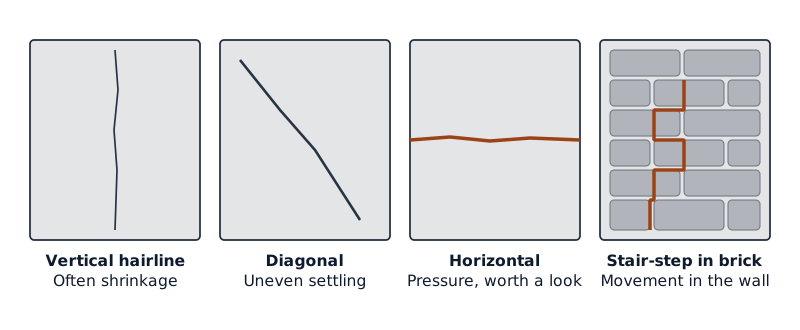
How they usually compare:
| Non-structural | Structural | |
|---|---|---|
| Cause | Concrete or plaster shrinking as it dries | Soil movement, settlement or heave under the house |
| Edges | Flush, no step between the sides | One side may sit higher than the other |
| Over a year | Same width wet season and dry | Opens and closes, or keeps growing |
| Other signs nearby | None | Sticking doors, gaps at trim, cracked brick, sloping floors |
| Usual fix | Seal it and keep watching | Find and fix the movement, then the crack |
What kinds of non-structural foundation cracks show up in Houston homes?
Most Houston homes sit on a concrete slab, so the common non-structural cracks are in the slab: early shrinkage cracks from the day of the pour, slower drying shrinkage cracks, and a fine surface web called crazing. Above the slab, single hairline cracks in mortar and drywall tape joints are often non-structural too.
- Plastic shrinkage cracks. These form in the first hours, before the concrete hardens, when the surface dries too fast. Penn State's concrete library describes them as about 1/8 inch wide and 2 to 4 inches deep, and says they usually don't impair the slab's structural performance.
- Drying shrinkage cracks. Concrete keeps losing water for months. The American Concrete Institute says cracking should be expected unless the surrounding air is kept near 100% humidity. These usually show up as thin, mostly straight cracks that appear in the first months after the pour and then stop growing.
- Crazing. A web of very fine surface lines, usually on a garage floor or a patio, from the top layer drying too fast during curing. It is generally shallow and a matter of looks rather than strength.
- Hairline cracks in brick veneer mortar. Brick on most Houston homes is a veneer, an outer layer that doesn't hold the house up. One short hairline in a joint is often just mortar shrinking. A stair-step pattern through several courses usually means the slab below has moved.
- Drywall tape-joint cracks. A thin straight line along a seam is often seasonal movement in the framing, not the slab.
Much online advice about horizontal cracks is written for a basement. Houston homes almost never have one, so apply it to a slab with care.
Are hairline foundation cracks normal?
Yes, for the most part. A hairline crack in a slab that is flat across both sides, has no damp in it and hasn't grown since you first saw it is the normal result of concrete drying. What turns a normal hairline crack into a concern is change: it widens, it steps, or new damage appears around it.
The widths and published limits that builders and engineers use are set out in acceptable cracks in a concrete slab, and you can compare the look of yours against pictures of normal foundation cracks.
Why do non-structural cracks still matter?
A non-structural crack doesn't weaken the house, but it is still an opening. It can let moisture up through a slab or in at the slab edge, and give subterranean termites a hidden path inside. Penn State notes cracks in some floors have been linked to leaks. Sealing costs little next to either problem.
- Moisture. Water wicking through a slab crack shows up as damp carpet, lifting vinyl plank or a musty smell.
- Termites. Texas A&M AgriLife Extension says native subterranean termites get into homes by building shelter tubes over or through cracks in foundations. A crack you can see on the outside of the slab is one you can seal.
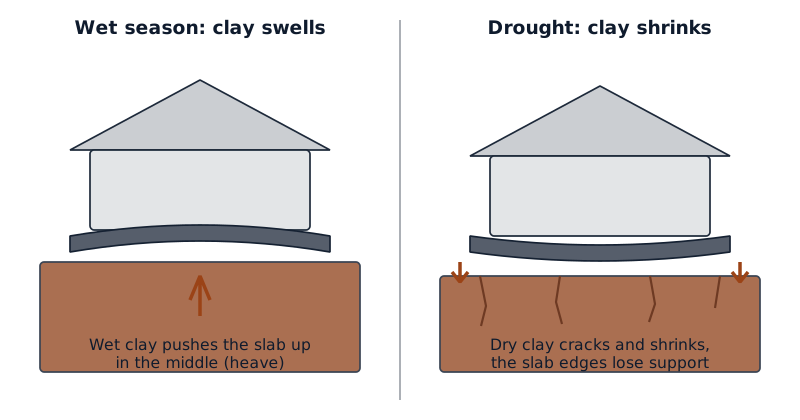
- Clay soil. The USDA describes Lake Charles clay, common around Houston, as 45 to 60% clay that cracks open when dry. In a dry summer the soil pulls back from the slab edge, leaving an edge crack open to the next heavy rain.
None of this needs full waterproofing. A flexible sealant on the visible crack does most of the job.
How do you treat a non-structural crack yourself?
You can seal a stable hairline crack in an exposed slab edge, garage floor or patio yourself. Clean it, let it dry, fill it with a flexible concrete crack sealant suited to the width, and keep a record so you can tell later whether it moves. Indoors under flooring, leave the slab alone unless water comes through.
- Record it first. Photograph it with a ruler in the frame and pencil the date and width beside it. Sealant hides movement.
- Clean it. Brush and vacuum out the grit.
- Let it dry. Wait for a dry spell. Most crack sealants call for a clean, dry surface on the label.
- Fill it. Use a flexible concrete crack sealant, not a rigid patch, so it can stretch with the seasons. Follow the label.
- Recheck through a full year. Look after the hottest month and after a wet spell. A sealant bead that has split down the middle tells you the crack is still opening.
Stop there. Cutting into the slab, injecting cracks under pressure, or lifting and leveling any part of the house is work for a foundation contractor, and in the City of Houston foundation repair needs a building permit. For outside cracks, the step-by-step method and sealant choices are on fixing cracks in foundation on the outside.
When does a non-structural crack become a serious one?
A crack stops counting as non-structural when it changes. Watch for widening between your marks, one side rising above the other, a crack that reaches around a corner of the slab, horizontal cracks in a block or brick wall, or new trouble nearby such as doors that stick. Any of those suggests the foundation is moving, and the crack is a symptom, not the problem.
Houston clay swings between wet and dry through the year, so a crack can look stable for three months and then open in August. That is why the recheck runs a full year. The full list of warning signs, with how to judge each one, is on foundation cracks: when to worry.
If a crack does turn out to be structural, delay costs money: This Old House notes a hairline crack sealed for $250 to $800 can become a $10,000 to $15,000 repair if the cause is left to grow.
Who can confirm a crack is non-structural?
A foundation contractor can give you a view during a visit, but a formal written opinion that a crack is non-structural comes from a structural engineer. That matters when you're buying, selling or claiming on insurance. The engineer inspects the house, usually measures floor levels, and writes up the cause and any repair. Your year of notes and photos helps either of them.
Typical costs, as published guides:
| Service | Typical range | Source |
|---|---|---|
| Foundation inspection in Houston | $300 to $1,000, averaging about $600 | Houston Press guide, 2026 |
| Structural engineer report | $500 to $1,000 | This Old House, October 2026 |
| Crack filling by a professional | $250 to $800 | This Old House, October 2026 |
These are guides; the real price comes after someone sees the house. The steps for booking an engineer and what the report should say are in how to get a structural engineer report.
If you'd like a local foundation contractor to look at a crack, we'll arrange a visit. They look at the crack and the house around it, and you get the price in writing before any work starts.
Questions people ask
Should I seal a non-structural crack or leave it alone?
Seal it if it is on a surface you can reach and see, like the outside edge of the slab, a garage floor or a patio. Sealing keeps water and termites out and costs little. Record the width and take photos first, since sealant hides movement. Under finished flooring, leave the slab alone unless water is coming through.
Can a non-structural crack let water into my house?
Yes. The crack doesn't affect how the slab carries the house, but it is still a gap. Water can wick up through a slab crack and show as damp flooring or a musty smell. If water appears at a crack after rain, find the source before sealing, because a leaking pipe under the slab needs a different fix.
Do non-structural cracks get worse over time?
A shrinkage crack usually does most of its widening in the first months and then slows, though the American Concrete Institute notes concrete can keep shrinking for years. A crack that keeps getting clearly wider is probably not shrinkage. On Houston clay a crack can open slightly in a dry summer and close after rain, so compare the same season year to year before you decide it is growing.
Are non-structural cracks covered by homeowners insurance?
Usually not. The Texas Department of Insurance lists earth movement among the risks most home policies don't cover, and damage to foundations or slabs as an optional add-on you buy separately. Sudden, accidental water release is usually covered, a continuous leak is not. Check your own policy and its endorsements, or ask your agent.
This guide is one of many on Foundation Repairs Houston Quotes foundation repair.
Sources
- University of Wisconsin Cooperative Extension, Concrete materials and properties (Kammel), hosted by Wisconsin DATCP
- Penn State College of Engineering, plastic shrinkage cracking
- American Concrete Institute, ACI 224R-01 Control of Cracking in Concrete Structures, chapter 3
- Texas A&M AgriLife Extension, Urban and Structural Entomology, native subterranean termites
- This Old House, foundation repair cost guide (October 2026)
- Houston Press, guide to foundation repair in Houston (2026)
- Texas Department of Insurance, home insurance guide
- USDA NRCS, Lake Charles soil series description
- City of Houston weekly building permit report, July 2024
Last changed