To level a floor in an old house, work from the bottom up. First map the slope so you know where the low spots are. Then fix whatever holds the floor up: sunken piers, crushed shims, sagging beams and tired joists. Only after the structure is sound do you flatten the floor surface itself. Skip that order and the new floor follows the old dip within a season. Below: each stage for Houston's older pier and beam and slab homes, and where the work crosses from DIY into foundation leveling that needs a contractor and a permit.
How do you find out why an old floor is out of level?
Map the floor before you touch anything. Stretch a string line or use a laser level across each room, mark the low points in pencil on the floor, and note how far each sits below the high point. Then go into the crawl space under those marks. The pattern tells you the cause: one low corner points to a sunken pier, a dip in mid-room points to a sagging beam or joist.
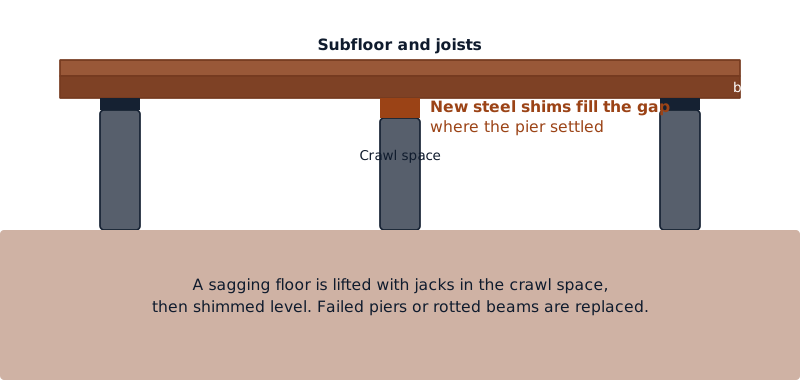
Readings to take and what they usually mean:
| What you find | Likely cause | Where the fix happens |
|---|---|---|
| Floor drops toward one outside wall | Perimeter piers or a beam have settled | Under the house, at the piers |
| Hump in the middle of the house | Edges have dropped around a center that stayed put, or the center has heaved | Under the house; needs readings over time |
| Bounce or dip between two supports | Undersized, cracked or notched joist | Floor framing |
| Soft, spongy patch | Rotted subfloor, often near a bathroom or old leak | Floor surface and framing |
| Gentle wave, nothing moving | A century of slow settling, now stable | Floor surface only, if at all |
Look outside too. A freshly cracked driveway or a walkway dropping away from the porch says the clay is still moving. Houston's Lake Charles clay cracks open in dry spells, the USDA says, and swells back when it rains. The wider list of causes is on how to fix uneven floors.
How level does a floor in an old house need to be?
An old floor rarely needs to be dead level. The practical goal is a floor that is stable, has no sudden dips you can feel underfoot, and lets doors swing and furniture sit without wedges. Forcing a house that has sat out of level for decades back to perfect can crack plaster, split trim and jam windows that have adapted to the old shape.
So decide your target before you start. Many owners of older Houston homes settle for taking out the worst slope over a few rooms and stopping further movement, rather than chasing a laser line wall to wall. Tile needs a flatter surface than carpet, so the flooring you plan sets how far to go.
How do you level an old floor from the crawl space?
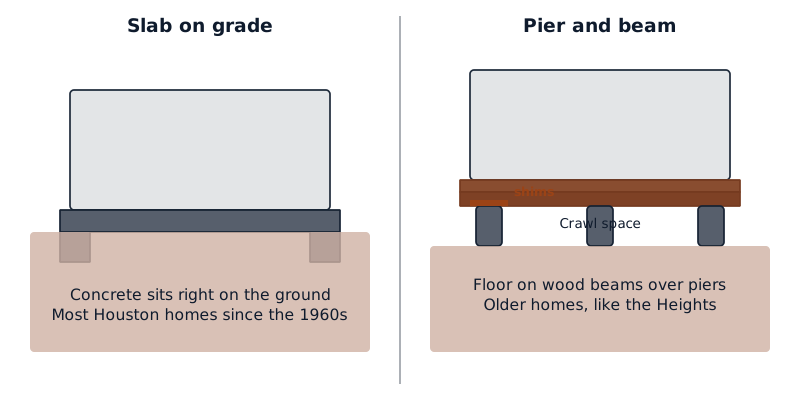
On a pier and beam house, most of the leveling happens underneath. You raise the low beams a little at a time with jacks set on solid cribbing, replace crushed or rotted shims with hard, durable material, reset or add piers where they have sunk, and then let the house rest before taking new readings. The floor above comes up with the beams.
The usual order, where the crawl space is safe to work in:
- Photograph existing cracks so you can tell new ones from old.
- Set jacks under the beam, not the joists. Put each jack on a wide, solid base. Wet clay will let a jack sink.
- Lift in small steps. Raise a fraction of an inch, wait, and listen. Stop if you hear cracking or see new gaps.
- Replace the packing. Swap soft, split or wet wood shims for steel or hard treated material, sized to fill the gap fully.
- Lower onto the new support and remove the jack. Re-read the floor above.
- Wait weeks, then check again before closing up or laying new flooring.
If a pier itself has sunk or tilted, the fix is a new support, and on Houston clay that often means a concrete or steel pier pressed deep to firmer soil. That is contractor work, covered on pier and beam foundation repair. Joists that sag between supports can be sistered with new lumber or given a new beam underneath; sagging floor joist repair goes through those options.
How do you level a floor from above without touching the foundation?
When the structure is stable and only the surface is wavy, you level from above. On a wood floor that means planing down high joists or humps, building up low areas with tapered strips or sleepers, then laying new plywood underlayment. On a slab, it means grinding high spots and pouring a self-leveling underlayment into the low ones before new flooring goes down.
Matching the surface fix to the problem:
| Surface problem | Common fix | Notes |
|---|---|---|
| Low run of floor along one wall | Tapered strips ripped to the dip, fixed to joist tops, new subfloor over | Opens the floor; best during a remodel |
| Small humps | Plane or sand the high spots of the subfloor | Watch for nails and old finishes |
| Many small dips on wood | Patching compound, then underlayment | Only on a stiff floor; a bouncy floor cracks it |
| Dips on an old slab | Grind highs, self-leveling underlayment in lows | Follow the product's primer and thickness rules |
A floor that flexes will crack any pour or patch, so stiffen it first.
How do you level an old slab floor?
An older slab house that is out of level has either sunk at the edges or was poured unevenly and never moved. If readings stay the same over several months, the floor surface can be ground and topped with self-leveling underlayment. If the slab keeps dropping, the fix is piers under the edge beam, which only a foundation contractor can install.
Most Houston slab homes date from the 1960s on. A pour on a slab that is still moving hides the problem for a while, then cracks with it, so confirm the readings first. The surface methods are covered in how to level uneven concrete floors.
What should you check before working on an old floor in Houston?
Check three things before you start: whether the work needs a permit, whether old paint or finishes contain lead, and whether the house sits in a historic district. Inside the City of Houston, foundation repair takes a building permit; the city's permit reports list shim and level jobs on block and base foundations. Older homes add lead and historic rules on top.
- The permit. Leveling the structure (piers, beams, shims) is foundation repair and needs a permit inside the city. A new floor covering on its own usually does not. Outside the city limits, ask your own building department.
- Lead. EPA's Renovation, Repair and Painting rule covers homes built before 1978. Paid work that disturbs paint there must follow EPA's lead-safe practices. Test before you sand old painted boards or trim.
- Historic districts. Many Heights homes are pier and beam Craftsman bungalows from 1905 to 1925, the city's design guidelines say, and its three historic districts need a Certificate of Appropriateness for some changes; see the Houston Heights area guide.
When does leveling an old floor need a foundation contractor?
Call a foundation contractor when a pier has sunk or tilted, when more than one corner of the house is low, when floor readings change from month to month, or when a slab is involved. Those all need new supports pressed deep into firm soil, hydraulic equipment and a permit. Swapping a few shims under a beam you can reach safely is a homeowner job. Re-supporting the house is not.
Expect an elevation survey and a written scope naming the piers and target readings. In Houston, a typical foundation repair runs about $3,300 to $6,800, and each concrete pier about $300 to $600, according to a 2026 Houston Press guide. If the cause is unclear, a structural engineer's report runs about $500 to $1,000, This Old House says. Ranges for older homes specifically are on the cost of leveling floors in an old house.
We'll arrange a visit from a local foundation contractor, and you get the readings explained and a written quote before any work begins.
Questions people ask
Can you level a floor in an old house without lifting it?
Yes, if the structure underneath is stable. You can flatten the surface with tapered strips and new underlayment on a wood floor, or with grinding and self-leveling underlayment on a slab. That fixes how the floor feels and looks. It does nothing if piers or beams are still sinking, so take readings over a few months first to be sure the house has stopped moving.
How long does it take to level a floor in an old house?
A surface fix in one or two rooms usually takes a few days, plus drying time for any compound or underlayment. Leveling from the crawl space takes longer, because the house is raised in small steps and left to settle between lifts. Pier work by a contractor is often done on site in days, but the permit and any engineer's report can add time before it starts.
Should you level the floor before or after new flooring?
Before. Any leveling under the house, and any surface leveling, has to be finished and settled before new flooring goes down. Lifting under new tile or hardwood cracks tile and opens seams. Wait a few weeks after a lift, re-read the floor, then install.
Is it worth leveling the floors in an old house?
It is worth doing when the floor is still moving, when it causes trips or jammed doors, or before a remodel or sale. A stable, gentle slope in a century-old home may not be worth the cost or the risk of cracking old plaster. A floor survey shows which case you are in.
The rest of our guides start from Foundation Repairs Houston Quotes foundation repair.
Sources
- City of Houston weekly building permit report, July 2024
- Houston Heights design guidelines, City of Houston Planning
- US EPA, Lead Renovation, Repair and Painting Program
- Houston Press, guide to foundation repair in Houston (2026)
- This Old House, foundation repair cost guide (October 2026)
- USDA NRCS, Lake Charles soil series description
Last changed