Epoxy injection fills a foundation crack under pressure with a two-part resin that hardens and bonds the concrete on both sides back together. The American Concrete Institute says it can restore strength and cut moisture getting through in cracks as narrow as 0.002 inch. It only works on a crack that has stopped moving. If the soil under your slab is still shifting, the crack reopens beside the repair. For the full range of fixes, start with foundation crack repair in Houston. This page goes deeper on the injection itself: which cracks suit it, how the work is done, and when to choose something else.
What is epoxy injection for foundation cracks?
Epoxy injection is a repair where a contractor seals the face of a crack, fits small entry ports along it, and pumps a liquid two-part epoxy into the ports until the crack is full. The resin hardens inside the concrete and glues the two broken faces together. Done well, the crack is filled through its depth, not just plugged at the surface, which is what separates it from a caulk or a patch.
A surface sealant keeps water out for a while but adds no strength. Hydraulic cement is different again: a fast-setting plug covered on hydraulic cement for foundation cracks.
On a Houston house, the cracks people inject are usually in the exposed slab edge, a garage slab, or the beams of an older pier-and-beam home. National guides lean on basement walls, which Houston homes almost never have.
Which foundation cracks can epoxy injection fix?
Epoxy injection suits cracks that are dormant, meaning they have stopped growing, and are clean enough to take the resin. Width matters less than you might think: the ACI guide puts the lower limit at 0.002 inch, though the Texas Department of Transportation notes cracks under 0.005 inch are often hard to fill well. The deciding question is whether the concrete around the crack has stopped moving.
| Crack | Good fit for epoxy? | Why |
|---|---|---|
| Vertical crack in the slab edge, not growing | Yes | The classic case for injection |
| Crack that grows between your pencil marks | No | The movement will crack the rigid epoxy or the concrete beside it |
| Crack with one side higher than the other | No, not first | The slab has dropped and needs support before sealing |
| Damp crack that can be dried | Yes, with care | Dry it first, or use a moisture-tolerant epoxy |
| Crack seeping water with no structural concern | Usually not | ACI suggests polyurethane or other non-structural fillers here |
| Crack from rusting steel inside the concrete | No | ACI warns the ongoing corrosion opens new cracks |
Hairline cracks from curing are usually stable and often need no repair at all. A pencil mark and date at each end of a crack shows within weeks whether it is growing. Our guide on when foundation cracks are worth worrying about covers the warning signs in more depth.
How does a contractor inject epoxy into a foundation crack?
A contractor injects epoxy in four stages: clean the crack, fit ports and a surface seal, pump the resin in port by port until it will take no more, then remove the ports and seal once the epoxy has cured. The ACI field guide sets out each step, and the quality of the cleaning and the patience during injection decide whether the crack fills through its depth.
- Find the cause. The guide is clear that the cause of the cracking must be assessed and corrected before any repair. On Houston clay, that usually means checking floor levels and drainage first.
- Clean the surface. About 1/2 inch each side of the crack is cleaned, preferably with a wire brush. Grinders are avoided because they can pack dust into the crack.
- Fit the ports. Entry ports are fixed along the crack, typically about 8 inches apart, wider apart on wider cracks.
- Cap the crack. A paste seal, roughly 1 inch wide and 3/16 inch thick, goes over the crack between the ports so the resin can't escape.
- Pick the resin. For cracks 0.010 inch or narrower, the guide calls for a low-viscosity epoxy of 500 centipoise or less. Wider cracks take a thicker grade.
- Inject. Vertical cracks are filled from the bottom port up. On a flat slab, injection starts at the widest part. When resin appears at the next port, the first is capped and the work moves along.
- Finish. After the epoxy cures, the ports and cap seal are removed by heat, chipping or grinding.
TxDOT's own manual says crack injection takes a great deal of skill, which is why the cleaning and port spacing matter as much as the resin.
Epoxy or polyurethane: which is better for foundation cracks?
Epoxy is better when the crack needs its strength back and has stopped moving, because it sets hard and bonds the concrete together. Polyurethane is better when the goal is to stop water through a crack that isn't structural, because it stays flexible. The ACI guide itself says that where a crack doesn't compromise the structure, polyurethane or another non-structural filler may be the more suitable choice.
In practice, epoxy is the choice for a stable crack in a slab edge or beam, and polyurethane for a seeping crack where waterproofing is the aim. Neither one lifts a slab, fills a void under it, or stops the clay from moving. A contractor who suggests either as the whole fix for a slab with sloping floors is treating the symptom.
Why does epoxy injection fail on some Houston foundations?
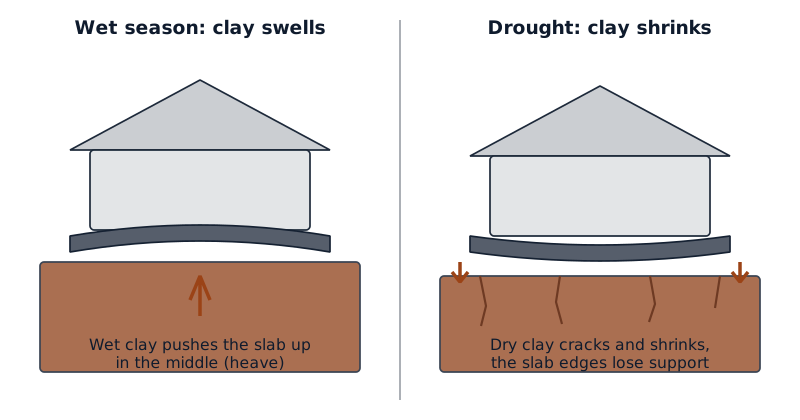
Epoxy injection fails here mostly because the slab is still moving. The ACI guide warns that if a crack is subject to later movement, epoxy may not be suitable. Houston sits on heavy clay that swells when wet and shrinks when dry, so a crack sealed over that movement often reopens next to the repair within a season or two.
The USDA describes Lake Charles clay, common under homes in southeast Texas, as 45 to 60% clay that cracks open 1/2 inch to 2 inches wide at the surface in dry spells. When the rain returns, it swells again. A rigid epoxy can't follow that cycle. The concrete either cracks again beside the repair or a new crack opens nearby.
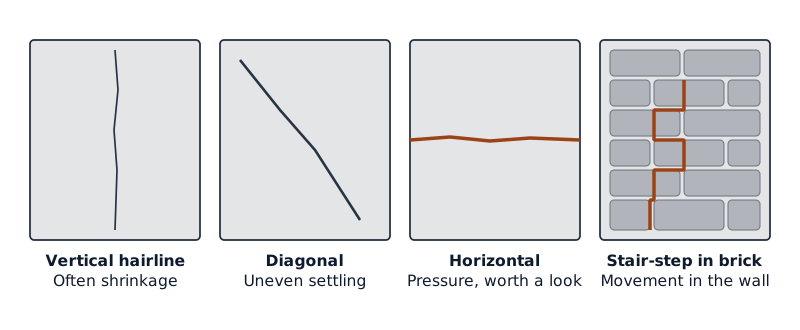
Other reasons an injection fails: the crack was wet or dirty, the ports were too far apart so the middle stayed empty, or it was the wrong problem. Horizontal cracks and stair-step cracks in brick usually point to pressure or settlement, not a crack that just needs filling. The patterns are explained on vertical vs horizontal foundation cracks.
When movement is the cause, the order is support first, then seal. That repair is covered on slab foundation repair. In the City of Houston, foundation repair work of that kind needs a building permit, and the city's weekly permit reports list them by the dozen.
Can you use an epoxy injection kit yourself?
You can use a DIY epoxy injection kit on a narrow, dry crack that your pencil marks show has stopped moving, with level floors and doors that close properly. Stop there. A crack that is growing, offset, wider than about 1/4 inch, seeping water or paired with sticking doors needs a contractor to find the cause, and any work to support or lift the house needs a permit in the City of Houston.
If you do it yourself, the ACI guide calls epoxy resins hazardous: wear eye protection and rubber gloves, ventilate closed spaces, and follow the kit's own directions for mixing and cure times.
The steps for sealing a small slab crack, from lifting the flooring to watching the repair afterward, are in how to repair a cracked foundation.
How much does epoxy injection cost in Houston?
Crack filling or injection typically costs about $250 to $800, according to a national 2026 cost guide. Length of the crack, access, and whether flooring has to come up drive where your job lands. If the crack turns out to be a sign of settlement, the job becomes a foundation repair with piers, which costs far more than the injection alone.
The same guide warns that a hairline crack sealed for a few hundred dollars can grow into a $10,000 to $15,000 repair if the movement behind it is ignored. The serious cost is sealing a crack while the slab underneath keeps moving. These figures are guides, and the contractor prices your house after seeing it. The wider picture is on the foundation crack repair cost page.
Not sure your crack is stable? We'll arrange a visit from a local foundation contractor to measure it and your floor levels, with a written quote before any work starts. Ask for a quote.
Questions people ask
How long does epoxy injection for foundation cracks take?
A single crack is often prepared and injected in one visit, though the surface seal has to cure before injection and the epoxy has to cure before the ports come off. Cure times vary by product and temperature, so ask the contractor what the resin they use needs. A crack under flooring takes longer.
What should I ask before I hire someone for epoxy injection?
Ask what caused the crack and how they know it has stopped moving. Ask whether they measured floor levels, which resin they plan to use and why, and what happens if the crack reopens. A good answer explains why injection suits your crack in particular.
Does epoxy injection waterproof a foundation?
Epoxy injection reduces moisture coming through the crack it fills, but it isn't a waterproofing system for the whole foundation. It seals one crack. If water is getting in at several places, or the crack is actively seeping, a flexible polyurethane or broader drainage and waterproofing work is usually the better approach.
Can epoxy injection fix horizontal cracks?
Epoxy can fill a horizontal crack, and the ACI guide notes wide horizontal cracks in flat slabs can even be gravity-fed. A horizontal crack in a wall, though, usually means something is pushing on it. Injection won't stop that pressure, so the cause has to be found and dealt with before the crack is sealed.
This guide is one of many on Houston foundation repair.
Sources
- American Concrete Institute, Structural Crack Repair by Epoxy Injection (ACI RAP Bulletin 1)
- Texas Department of Transportation, Concrete Repair Manual, crack repair by pressure-injected epoxy
- This Old House, foundation repair cost guide (October 2026)
- USDA NRCS, Lake Charles soil series description
- City of Houston weekly building permit report, July 2024
Last changed